Funding Opportunities & Resources
Top Tips - Keep it simple!
Make your application as easy to read as possible - the people who are assessing your application may not have a lot of time or much knowledge of the work you do so being clear is key.
Avoid complicated wording or acronyms if funders understand what you are asking for and how you meet their criteria, they are much more likely to say yes to funding your activity.
Don't Forget
Don’t forget if you are just starting out our get started guides have a range of information including setting up a group writing a constitution and finding and applying for funding
More information about the team and what we can offer can be found on our web pages.
Got an idea for the newsletter – we would love to hear from you!

Morrisons Foundation - Connecting Communities Fund
Further details
Background
Based in Bradford, the supermarket chain Morrisons established the Morrisons Foundation in 2015 to support local good causes across Great Britain. The Foundation, a charity registered in England, Wales and Scotland, receives its funding from a number of different sources.
Objectives of Fund
The Connecting Communities fund is for capital projects that make a difference to people's lives, by improving infrastructure development and shared spaces. Projects should:
- Breathe new life into local spaces.
- Bring people together.
- Secure the future.
Value Notes
Grants up to £20,000 are available for up to nine months.
Match Funding Restrictions
Match funding is not required.
Who Can Apply
UK charities that improve the lives of people and communities in England, Scotland or Wales can apply.
To be eligible, applicants must:
- Be registered with the Charity Commission (England and Wales) or the Office of the Scottish Charity Regulator Scotland (OSCR), Jersey Charity Commissioner, Charities Register of Guernsey and Alderney, or the Board of Charity Commissioners for Gibraltar.
- Have filed their accounts on time and in accordance with the Charity Commission/OSCR requirements.
- Own the property where the project is being delivered, or have a long-term lease with a minimum of three years remaining.
Preference is given to applications:
- Supporting a more deprived community.
- Delivered in a community closer to a Morrisons store.
- That will benefit a larger number of people.
- For projects that have a lasting legacy.
- From charities with a smaller annual income.
Restrictions
The following are not eligible for funding:
- Organisations that are not registered with the Charity Commission or OSCR (i.e. companies with exempt charitable status or CICs).
- Running costs, rent, salaries or utility bills.
- Costs of running sessions, recruiting staff or volunteer expenses.
- Expeditions, recreation or overseas travel.
- Fundraising events.
- Work that is primarily the statutory responsibility of public agencies.
- Promotion of religious or political messaging.
- Overseas appeals.
- Equipment which will be retained by individuals rather than the charity.
- Charities whose main purpose is animal welfare.
- Projects which could harm the reputation of the Foundation.
- Charities who have filed their accounts late, had accounts marked as qualified within the last three years.
- Charities who have received funding from the Foundation within the last two years.
- Contributions to larger projects that require in excess of £20,000 to be delivered.
- Requests for sponsorship, marketing or administration costs.
- Short-term projects (e.g. day trips, holidays, events or consumables).
- Projects benefiting a single individual.
- Retrospective or contingency funding.
- Contributions or top-up donations towards larger fundraising targets.
Eligible Expenditure
Capital costs are supported to: upgrade and revitalise buildings and outdoor areas; reduce social isolation and foster a strong sense of belonging; ensure vital local services remain open and accessible for generations to come.
Examples of funded initiatives include (but not restricted to):
- Open access spaces:
- Village halls and hubs
- Community centres and youth clubs
- Managed sports and recreation grounds
- Community gardens
- Disability and therapeutic centres:
- Riding centres for disabled people
- Neurodivergent day centres
- Independent living and training hubs
- Adaptive sports and wellbeing centres
- Youth and education:
- Mainstream schools PTA
- Community outdoor play areas
- Special education needs facilities
- Uniformed groups sites/huts
- Targeted crisis support:
- Women's refuges and abuse shelters
- Homeless shelters
- Supported living for vulnerable people
- Rehabilitation and recovery centres
- Health and wellbeing:
- Hospital charities
- Palliative care services
- Bereavement support hubs
- Respite break venues
- Isolation and cohesion:
- Elderly services and warm hubs
- Safe-spaces for minority groups
- Men's sheds
- Veteran support centres
Examples of projects may include:
- Community kitchen overhauls.
- Accessible toilets & changing facilities.
- Communal room refurbishment.
- Internal and external repairs.
- Therapeutic and activity sheds.
- Outdoor shelters & seating areas.
- External secure storage facilities.
- Forest school structures.
- Mobility & adaptive gym equipment.
- CCTV, secure doors & windows.
- Boilers, heaters and insulation.
- Workroom & large activity items.
- Landscaping of community gardens.
- Accessible sensory garden features.
- Inclusive outdoor play areas.
- Community outdoor fitness hubs.
Location
England, Scotland and Wales
How To Apply
Applications can be made at any time.
Decisions should be made within eight weeks.
Guidelines and an online application form are available at the Foundation's website.
Contact the Foundation for further information.
Documents & links
Coventry Peace Festival 2026 - Small Grants Programme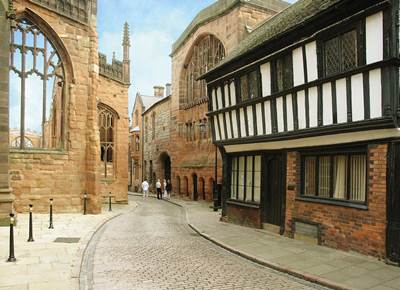
Coventry City Council is offering small grants to support community-led activity as part of Coventry Peace Festival 2026.
The Peace Festival reflects Coventry's status as a City of Peace and Reconciliation. We're looking for events and activities that advance the message of peace and reconciliation, and reflect on peace, conflict and remembrance.
At a glance
- grants of up to £250 per project
- applications open: Monday 28 September 2026
- applications close: 5pm, Friday 16 October 2026
- events must take place: 2 to 14 November 2026
Who can apply
- individuals
- community and voluntary organisations
- arts and cultural organisations
- charities
- schools
What we're looking for
Your project must meet at least one of the following priorities:
- peace and reconciliation
- community cohesion
- collaboration or co-creation
- diversity and inclusion
- widest possible reach and participation
Before you apply
You'll need to provide the following as part of your application:
- 2 months of recent bank statements (personal or organisational), to confirm financial legitimacy
- confirmation of Public Liability Insurance, or a note that you'll need guidance
- confirmation you're able to complete a risk assessment, or a note that you'll need guidance
How to apply
Complete the application form and return it to CultureSportsandEvents@coventry.gov.uk by 5pm, Friday 16 October.
Decisions will be confirmed by Friday 23 October, with a short mobilisation period before the Festival opens.
If your application is successful, you will be required to provide details about your event for inclusion in the Festival brochure and other promotional materials, in the format and by the deadline requested.

The Citizen Local Fund
Further details
Background
Funding is provided and administered by Citizen, a social housing provider in the West Midlands, for the benefit of their residents.
Objectives of Fund
The aim of the fund is to support Citizen Housing residents and communities to thrive. Grants are available for projects which will promote positive mental and physical health, reduce loneliness, promote community cohesion and being improvements to the local area.
Value Notes
The total annual fund value is £50,000.
Grants of between £50 and £3,000 are available.
Who Can Apply
Local groups, organisations and charities may apply.
Restrictions
Funding is not available for:
- Profit making businesses.
- Salaries.
- Projects outside of the West Midlands.
Eligible Expenditure
Projects must be within the West Midlands and benefiting people in Citizen Housing communities.
Projects should seek to achieve one or more of the following:
- Improving physical health and mental wellbeing.
- Reducing social isolation and loneliness.
- Supporting community cohesion by helping to bring people of all ages and backgrounds together.
- Enhance local areas by improving the physical environment.
Examples of eligible projects include, but are not limited to:
- One-off community events/activities (e.g., family fundays, community BBQ’s, music events)
- Exercise classes.
- Fitness sessions.
- Wellbeing workshops.
- Food poverty initiatives.
- Coffee mornings.
- Social groups.
- Skills, training or workshops (e.g., digital skills workshops).
- Gardening projects.
- Environmental clean-up campaigns.
- Safer neighbourhoods projects.
- Youth clubs.
Funding can be used for, but is not limited to:
- Purchasing equipment.
- Accessibility improvements.
- Pilot ideas for new services.
Location
West Midlands
How To Apply
There are typically two application rounds per year.
The next deadline for applications is 23 October 2026.
An online application form is available on the Citizen Housing website.
Contact Citizen Housing for further information.

Blooming Genius: Empowering Neurodivergent Youth
Further details
Background
Blooming Genius was created by Genius Within C.I.C. as part of its social-impact work to support neurodivergent children and young people. The initiative focuses on grassroots organisations and communities that may have limited access to information and support around neurodiversity.
Objectives of Fund
The funding supports UK grassroots organisations delivering initiatives for neurodivergent children under 18 and their families. The scheme aims to help neurodivergent young people thrive in life and education, with a particular focus on communities that may have limited access to information and support around neurodiversity.
Value Notes
There is no fixed maximum grant. Awards typically range from a few hundred pounds to around £2,000.
Who Can Apply
Applications are open to grassroots organisations in the UK supporting neurodivergent children and their families.
Eligible Expenditure
Grants can be used for a wide range of activities that support neurodivergent children and their families.
Examples of previously supported activity include:
- Music sessions.
- An anti-bullying book.
- An inclusive boxing club.
- Communication aids for non-speaking autistic children.
Location
United Kingdom
How To Apply
The scheme operates twice a year, with grants awarded in June and December. The application windows are:
- 1 March - 25 April
- 1 September - 24 October
Applications are capped at 200 per application window. Once the cap is reached, further applications will not be processed.
The online application form is available on the Blooming Genius website.
Contact Blooming Genius for further information.

The Linnean Society
Further details
Background
The Linnean Society of London is the world’s oldest active biological society, providing a forum for the discussion and advancement of the life sciences.
Objectives of Fund
The scheme provides grants to support innovative projects, designed and led by young people in the UK, which aim to increase access to local natural spaces and improve understanding of local biodiversity.
Value Notes
Grants of up to £1,000 are available, however applications for significantly lower amounts are welcome.
The Society will co-fund projects along with other organisations.
Who Can Apply
Individuals and organisations who are linked to a school or community-based organisation that works directly with young people (16 and under) within the UK are welcome to apply. This includes (but is not limited to):
- School staff.
- Student groups.
- Home education groups.
- Community groups.
- Small charities.
Applications should be created in partnership with and ideally led by young people.
Restrictions
Grants cannot be spent on:
- Large prizes.
- Large non-consumable equipment (e.g. purchasing microscopes or computers).
- On-going salary costs.
- Costs that are already covered by other funding.
- General running costs.
- Overheads that are paid for by other income.
More than half the grant cannot be spent on refreshments or project specific staff costs.
Eligible Expenditure
Funding is intended for projects which affect change or empower local young people and the surrounding communities to increase access to natural spaces and improve understanding of the local biodiversity.
Applicants in London can also deliver projects to support blue infrastructure.
Examples of eligible projects are as follows:
- Running a school festival about nature.
- Painting community murals showcasing biodiversity in the area.
- Building or restoring a community garden.
- Creating a nature walk.
- Hiring a speaker to come and talk about local foraging.
Grants can be used for materials, room hire, publicity, speakers, trainers, freelancers, project-specific staff costs, audio-visual hire, reasonable volunteer expenses, transport, or other costs of activities/events.
Proposed projects should take place between January 2027 and July 2027.
Location
United Kingdom.
How To Apply
The deadline for applications is 25 October 2026.
The online application form is available on the Linnean Society website, along with a set of guidance notes.
A youth panel of 16 to 18 year olds from across the country will select who should receive an award.
Have a question about funding?
Need help on sourcing funding? or help writing a bid? get in touch
-
Community Resilience Lead Officer
JR -
Team
Thank you for your contribution!
Help us reach out to more people in the community
Share this with family and friends